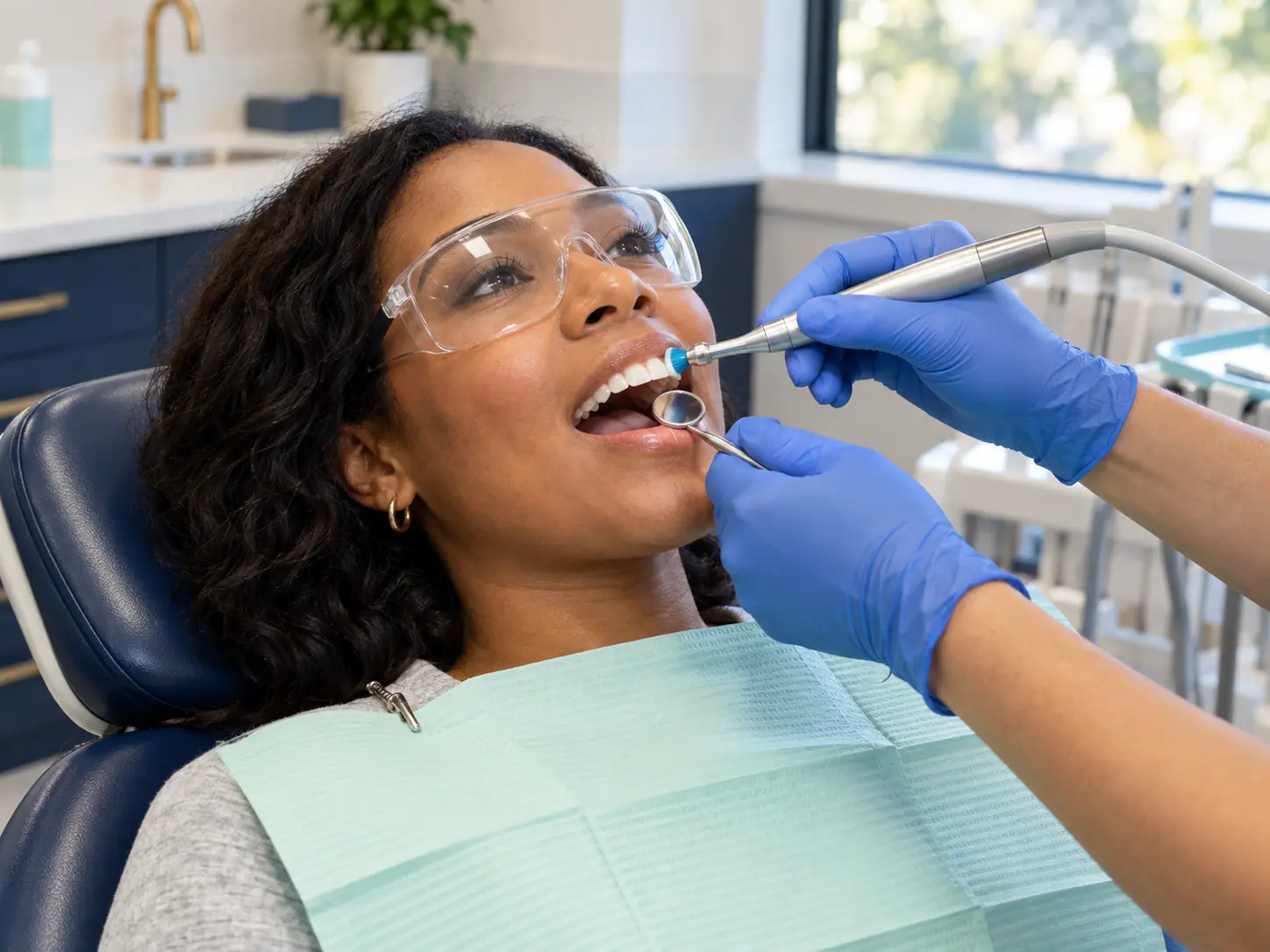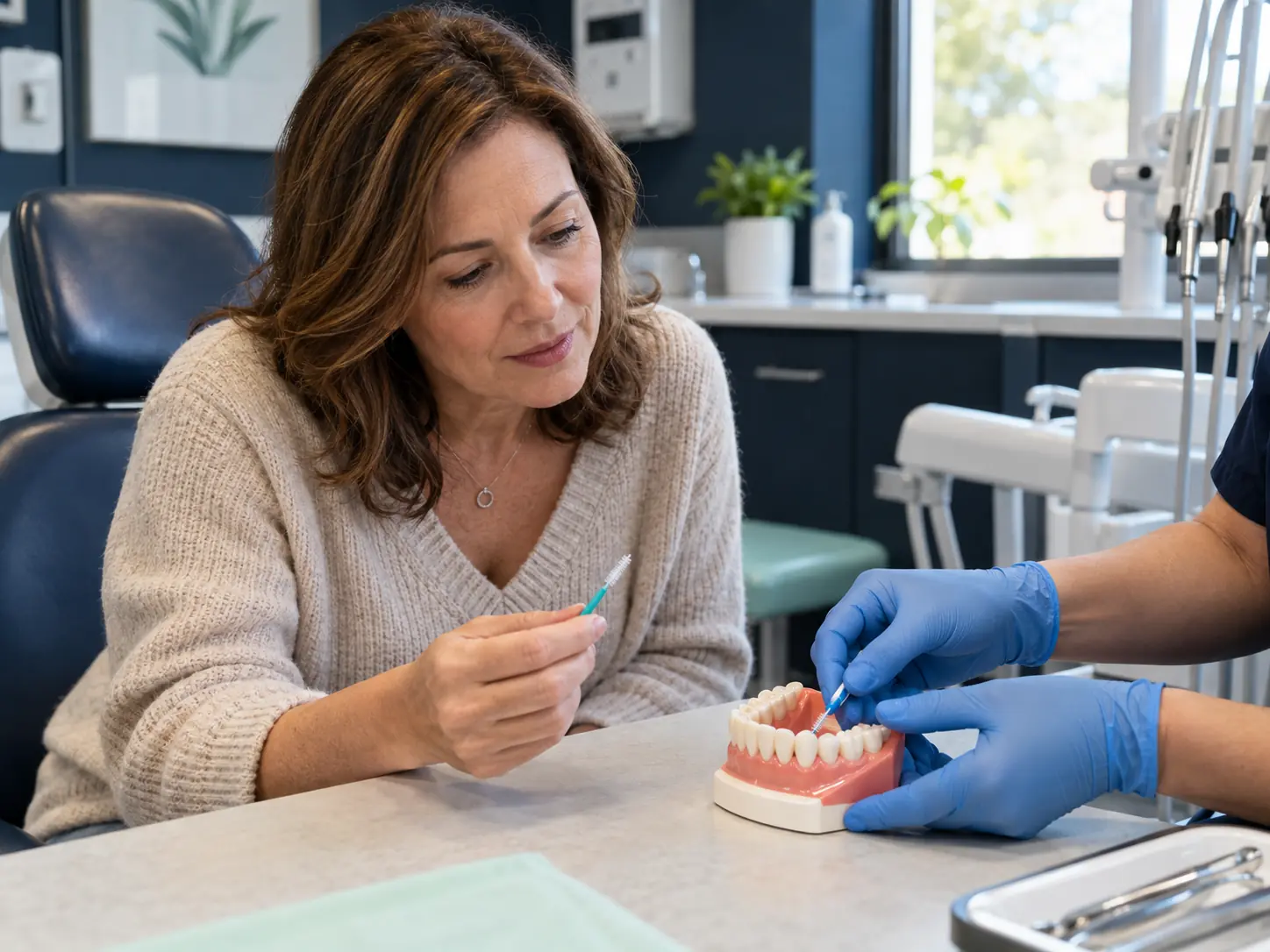
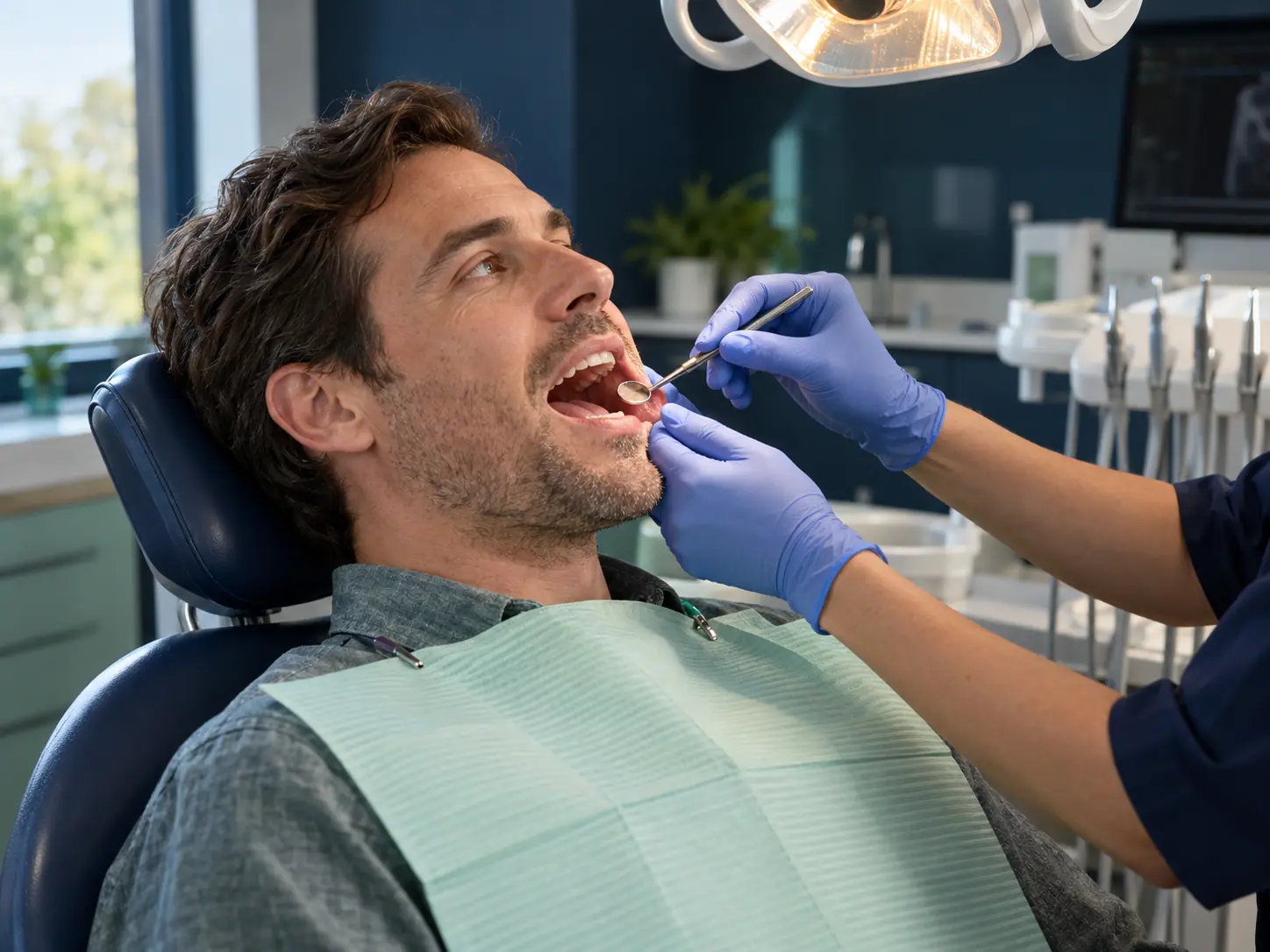
What an oral cancer screening at AAP Dental includes
An oral cancer screening at AAP Dental includes a review of risk factors, a visual examination of all soft tissue in the mouth, palpation of the tongue, floor of the mouth, jaw, and neck, and a record of any sore, patch, or lump to compare at the next visit.
- Risk review: the dentist asks about tobacco, alcohol, sun exposure, HPV status, and any personal or family history of oral cancer.
- Visual examination: the lips, gums, cheeks, tongue, palate, tonsils, and throat are inspected under the dental light for white patches, red patches, ulcers, and color changes.
- Palpation: the dentist feels the tongue, floor of the mouth, jaw, and lymph nodes of the neck for lumps or firm areas.
- Documentation: any finding is measured and photographed, because a sore that persists for more than 14 days needs follow-up.
- Referral: a suspicious area is referred to an oral surgeon or physician for a biopsy, which is the only test that confirms or rules out cancer.
Oral cancer screening cost and insurance
Oral cancer screening at AAP Dental comes with the dental examination, so new patients receive it within the $49 examination and cleaning offer, and most traditional dental insurance plans cover the examination as preventive care twice a year.
AAP Dental accepts most traditional dental insurance plans and does not participate in HMO plans. Payment options include CareCredit financing, flexible payment plans, cash, checks, and credit cards. The specialist who performs a biopsy bills for it separately.
What an oral cancer screening finds and why early detection matters
An oral cancer screening finds white patches (leukoplakia), red patches (erythroplakia), ulcers that do not heal within 14 days, lumps, thickened tissue, and numbness, and early detection matters because oral cancer found at a localized stage is treated with smaller surgery and a better outcome than cancer found after it has spread to the lymph nodes.
- A screening is not a diagnosis: a referral for biopsy does not mean you have cancer, and most patches examined are benign.
- Precancerous changes are monitored or removed before they progress.
- Oral cancer is often painless in its early stage, which is why a visual examination finds it before the patient does.
- Screening also finds canker sores, fungal infections, and irritation from a denture or a sharp tooth, which are treated at the same visit.
Who needs an oral cancer screening
Every adult needs an oral cancer screening at least once a year, and patients with risk factors are screened at every 6 month visit. Risk factors include tobacco in any form, heavy alcohol use, HPV infection, prolonged sun exposure to the lips, age over 40, and a previous oral cancer diagnosis.
Patients who smoke and drink carry a higher risk than patients who do either alone, because the two exposures multiply. Ask the dentist about quitting tobacco and limiting alcohol, which lowers the risk over time. The dentist examines children for soft tissue changes during their regular dental cleaning visits.
What happens during an oral cancer screening
- Remove any removable denture or partial so all tissue is visible.
- The dentist inspects the lips and the inside of the cheeks.
- The tongue is held with gauze and examined on the top, sides, and underside, where most oral cancers begin.
- The floor of the mouth, palate, tonsils, and throat are checked with the mirror and light.
- The dentist palpates the neck and under the jaw for enlarged lymph nodes. The full screening takes about 5 minutes.
The screening needs no preparation, causes no pain, and gives a result at the same visit. The dentist re-checks a sore or patch in 14 days and refers a persistent finding for biopsy.
Oral cancer screening at the dentist vs self-examination
An oral cancer screening at the dentist differs from a self-examination by reach and training: the dentist sees the back of the tongue, the tonsils, and the throat with a mirror and light and feels the lymph nodes, while a self-check in the bathroom mirror covers the lips, cheeks, and front of the tongue. Do both, and report any sore that lasts more than 2 weeks.
| Attribute | Dentist screening | Self-examination |
|---|---|---|
| Areas covered | All soft tissue, throat, neck lymph nodes | Lips, cheeks, front of the tongue |
| Frequency | Every 6 to 12 months | Monthly |
| Tools | Dental light, mirror, palpation | Bathroom mirror and flashlight |
| Outcome | Documented and referred for biopsy when needed | Prompt to book a dental visit |
Why choose AAP Dental for oral cancer screening in Chicago
- Dr. Eduard Vernovsky, DDS and Dr. Myung Jin Nam, DDS perform the screening as part of every dental examination, so no separate appointment is needed.
- Findings are recorded and compared at each 6 month visit at the Harlem Avenue office.
- The screening is included in the $49 new patient examination and cleaning offer.
- Saturday hours until 4:00 PM make an annual screening easy to keep.
Oral cancer screening near Harlem Avenue: location and hours
AAP Dental Group sits at 5037 N Harlem Ave, Chicago, IL 60656, at the corner of Harlem Avenue and Foster Avenue on the Northwest Side. Patients come from Norwood Park, Harwood Heights, Norridge, Edison Park, and Park Ridge, all within 15 minutes of the office. Weekday hours at AAP Dental run Monday 9:00 AM to 6:00 PM, Tuesday 9:00 AM to 6:30 PM, Wednesday 9:30 AM to 6:00 PM, and Thursday and Friday 9:30 AM to 6:30 PM. Saturday hours run 8:30 AM to 4:00 PM, and the office closes on Sunday.
Oral Cancer Screening questions
Oral Cancer Screening patients at AAP Dental Group ask these 5 questions most often, and each answer below is the dentist’s short reply.
How long does an oral cancer screening take?
About 5 minutes, performed during the dental examination.
Does an oral cancer screening hurt?
No, the screening is a visual inspection and gentle palpation with no instruments beyond a mirror and gauze.
How often should you get an oral cancer screening?
At least once a year for every adult, and at every 6 month examination for patients who use tobacco, drink heavily, or have had oral cancer.
What does a positive oral cancer screening mean?
A finding means a patch, sore, or lump needs a biopsy to identify it. Most findings are benign. An oral surgeon or physician performs the biopsy.
Is an oral cancer screening covered by insurance?
Yes, as part of the dental examination that most traditional plans cover twice a year. New patients at AAP Dental receive it within the $49 examination and cleaning offer.
Book oral cancer screening in Chicago, IL
Book a dental examination at AAP Dental in Chicago, IL and receive an oral cancer screening at the same visit. The screening takes 5 minutes and no preparation. Book online through the AAP Dental appointment portal or call (773) 763-3600. Saturday appointments run from 8:30 AM to 4:00 PM.
Compare oral cancer screening and other preventive dental services at AAP Dental Group before you book.
Book a visit